I read The Game is Life by Terry Schott over a decade ago. Maybe longer. I honestly don't remember the exact year, and I'm not sure how I'd feel about the book if I picked it up again today. But certain ideas from it have stayed with me, lodged in my brain like splinters I can't quite remove.
This isn't a book review. It's about the concepts that won't let go.
The Premise (As I Remember It)
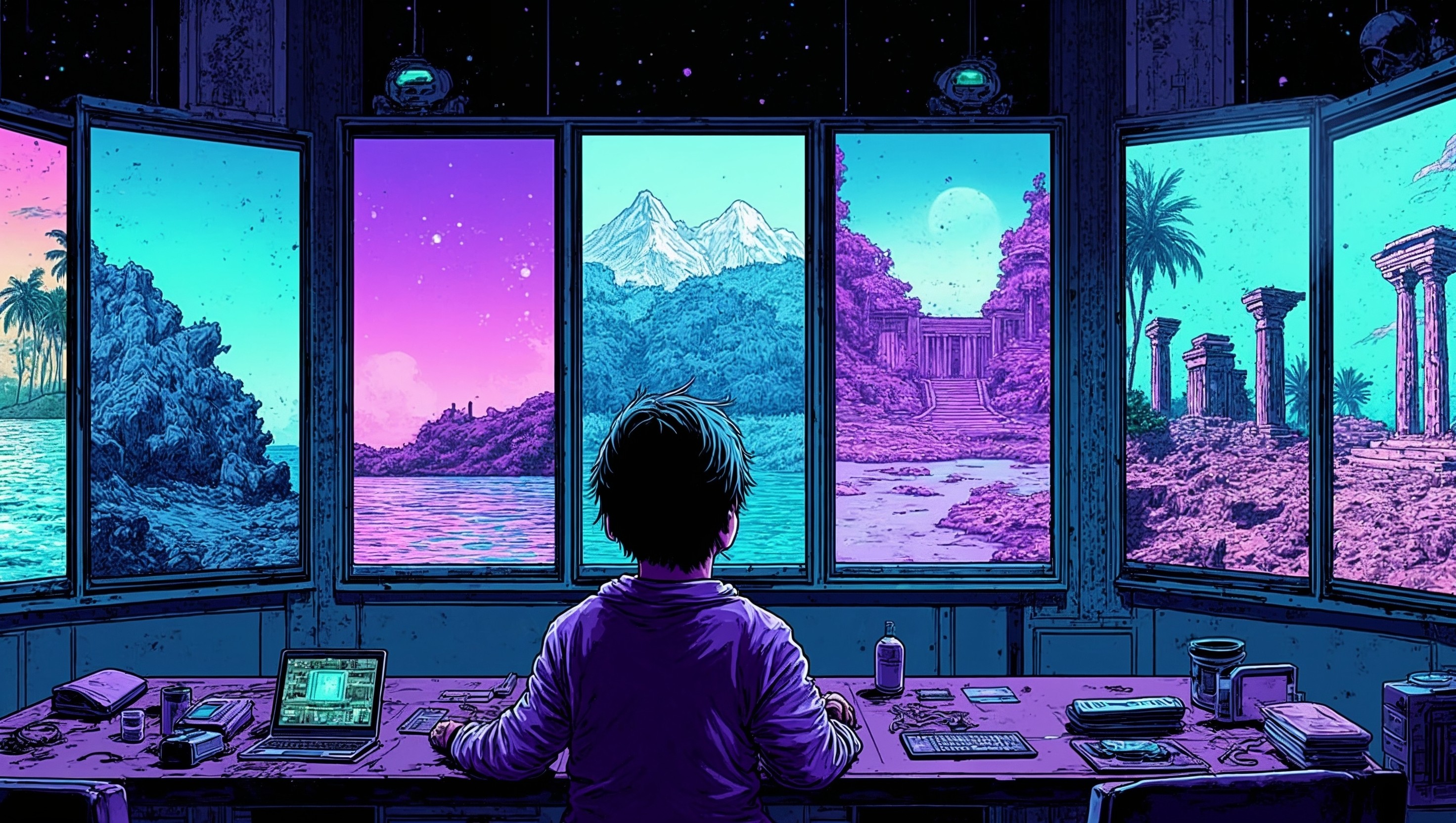
In Schott's world, people enter a game—a fully immersive simulation—to learn and grow. While inside, they believe it's real life. They experience everything: birth, childhood, relationships, work, failure, success, aging, death. The full arc of a human existence.
Then they wake up.
They return to the "real world," where they learn they've been inside a game the entire time. Their whole life was a simulation. And then? They go back in. Again and again. This is how their society educates its young; not through classrooms and textbooks, but through lived experience.
The twist? The most successful players—the ones everyone follows, the ones who "win"—aren't living stable, predictable lives. They're not the accountants (no shade, accountants). They're the risk-takers. The creatives. The ones with diverse skill sets who pivot, explore, and live dynamically unpredictable lives.
Why? Because interesting is what the game rewards.
What Makes a Life "Interesting"?
Here's where it gets fascinating to me.
In the game, success isn't measured by safety or comfort. It's measured by how many spectators you attract. The players with the most viewers—the most followers—are the ones who "win." They earn the best credentials, the highest status when they exit the game.
But here's the catch: the players don't know this while they're inside.
They're just living what they think is a human life. They don't know they're being watched. They don't know that accumulating an audience is the actual winning mechanism. They think they're just... existing. Trying to survive. Trying to be happy. Trying to figure out what it all means.
There's a whole other layer here—an entire economy built on watching other people's (player's, who in fact are kids in school even when adults inside the simulation) lives, spectators glued to the drama unfolding in someone else's existence. Sound familiar? But I'll leave that thread for another time.
What struck me then—and what still strikes me now—is this: the game doesn't reward the safe path. It rewards the edge of uncertainty. The lives people find compelling aren't the ones where everything goes according to plan. They're the ones where people take risks, make bold choices, fail spectacularly, pivot unexpectedly, and keep going anyway.
I see this in my own perspectives and ideals. Who do I celebrate? The boundary-pushers. The multi-hyphenates. The "unrealistic" dreamers. The people living at the intersection of audacity and skill.
Learning happens at the edge. Growth happens when the stakes feel real.
The Forgetting—and Why It Matters
The players don't know they're in a game while they're inside. That's the whole point.
They experience it as real. The stakes feel real. The emotions are real. When they exit, they remember everything. They see the bigger picture. They understand what they learned. But while they're in it? Total immersion.
What if our lives work the same way?
What if we're here to learn something we can only learn by forgetting we're learning?
I don't mean this in a religious or mystical sense—though I suppose it could be interpreted that way. I mean it as a design principle. Maybe true growth requires full immersion. You can't half-believe in the stakes. You can't stand outside the experience and observe yourself objectively while simultaneously living it. The simulation only works if you forget it's a simulation.
We level up through the immersive experience—by going all in.
Athletes visualize success because their brains treat the imagined experience as real. Actors lose themselves in characters because embodiment creates transformation. Designers prototype futures because tangible artifacts make abstract ideas believable.
The forgetting isn't a bug. It's a feature.
The Paradox—YOLO or Infinite Lives?
So here's the question that keeps circling back: if life were a game, what would we do differently?
We'd play to win. But what does "winning" even mean?
In games, we don't just exist. We seek impact. We want to change the world, unlock new levels, leave a mark. We take risks. We try bold strategies. We aim for the memorable run, not the forgettable one. We don't play games passively—we play them actively, with intention and urgency.
But here's the paradox that fascinates me most:
It doesn't matter if this is our only life or one of many.
If it's our only shot—we should give it everything.
If we get infinite chances but forget each time—we should still give it everything, because this moment is all we know.
Either way, the answer is the same.
Play like it matters—because it does.
Whether we're in a game or not, whether this is the first run or the hundredth, whether we wake up tomorrow or wake up somewhere else entirely and realize this was all practice—the paradox resolves itself.
Live fully. Act boldly. Take the risks that make your life worth watching, even if no one's watching. Especially if no one's watching.
Because maybe the point isn't the outcome. Maybe the point is the play itself.
So What?
If life is a game we've forgotten we're playing—what does that mean for how we design our world?
We get to choose: do we play it safe, or do we play it interesting?
Every choice we make is both real and rehearsal. Every prototype we build is both speculation and pre-experience. Every future we imagine becomes a memory our brains can reference when deciding what to do next.
That's the power of the experience. That's how we level up.
Not by standing outside and observing. But by diving in, forgetting we have a choice, and playing like everything depends on it.
You're Not Dreaming. You're Playing.
Maybe we're all in the game right now.
Maybe the most interesting life isn't the stable one—it's the one where we believe something better is possible and act accordingly. The one where we take the risks that make us uncomfortable. The one where we design futures we don't yet know how to build and then figure it out as we go.
The paradox resolves itself: live fully, regardless. What is an interesting life to you?
A note before I close: the book explores many other fascinating concepts I haven't touched here. Perspectives on education systems. The idea that we're always auditioning for something. Layers of reality stacked on top of each other—what if the "real world" is itself another simulation? These are threads worth pulling, questions worth sitting with. But this post isn't about covering everything. For that, you should read the book yourself (and tell me what you think).
Read more